My First Administration Role
What you learn when people are allowed to call you out on being wrong.
My first administration role...
...was in housing, based in a small office near the busy junction in the distance of this photo. As I write this, I am smiling because I am remembering an occasion walking to work with my now-husband along this road. A seagull flew over and pooed on us. I say “us,” THANKFULLY, it pooed on the shoulder of his coat and NOT (as I first feared) my hair, which at the time was long and very thick. That would have been a catastrophe.
It would have been catastrophic because of the expectations of this role. Housing is a pressured sector. It is not actually about HOUSES; it is about PEOPLE and HOMES. Any kind of life can walk through the door at any time. Front office staff were expected to be well-presented in smart office wear. They were not expected to turn up with seagull poo in their hair. Had that poo hit my hair, I would have had to turn around, go home and wash it, resulting in the loss of most of my lunch break for the next couple of days. At least, as I assured my husband, he could mop off the worst of it, HIDE his coat at his own workplace and drop it into a dry cleaner on the way home.

As well as being properly turned out, we were expected to always be polite and courteous and the director was not particularly supportive of the front office. He would often stop by when you were juggling talking to someone in person, taking a phone call and simultaneously printing out property brochures to say, “Now remember to multi-task.” At the same time, he could also be spontaneously kind, buying everyone ice-creams on a summer’s day when we were melting.
There was an "old" way of doing customer service that might have been better
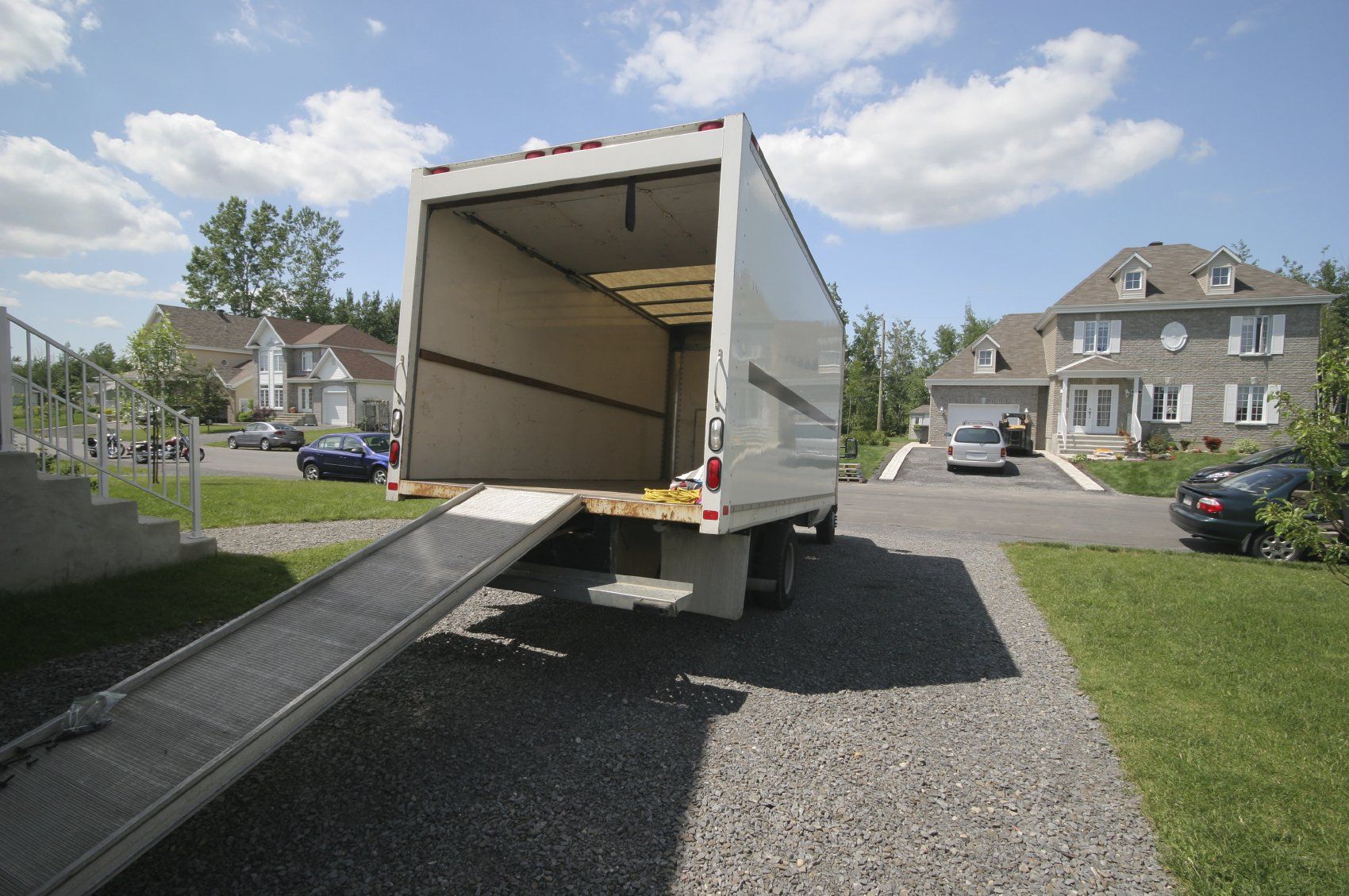
The reasons people move in and out of houses are not always happy ones. Divorce, bereavement, loss of a job, a house sale falling through are all driving factors. It is rare that people just choose not to pay rent; again, the circumstances behind that are difficult. Sometimes landlords are tricky and tenants have to put up with inconvenience and half-hearted property maintenance. In that situation, the office is battling on two fronts.
At the time, I found this role challenging, however looking back, I realise that it has taught me aspects of customer service that have now fallen by the wayside – and I don’t think this is necessarily right.
The kinds of "enquiries" we dealt with

Some of the customer “enquiries” and “complaints” were essentially what would nowadays be labelled “verbal abuse,” and “aggression,” and they would not get answered. We absolutely had to handle those situations. The director would remind people of the intense pressure people were under and he would expect us to serve everybody regardless of how they treated us. It didn’t help however, that the office systems needed updating. At this time, the early 2000s, we had no email or website, so EVERY enquiry had to come through three telephones. They rang so consistently the noise would be a continuous screech, rather than a “Ring, ring.” An aside, but about seven years later I returned and covered a maternity leave. By this time, the office manager had installed a website and email and begun to advertise through various online platforms as well as the local paper. It took the pressure off considerably because people could actually see what was available and then call to enquiry about just the properties they were interested in.
Some of the situations we handled probably were inappropriate looked through today’s perspective. I have been called, “The skinny girl in the corner,” and whilst pregnant with my son, someone delivering a filing cabinet expected me to hold it up while they slid it off the sack barrow. On the insistence of the director, I also had to carry the full container of water from a large dehumidifier up a steep flight of stairs from the basement a few days before going on maternity leave. I sat in front of a client shouting at me, refusing to leave the office when he had not brought his first rent in cleared funds, mere days after undergoing an amniocentesis test.
Other situations were ridiculous. For example, one of the builders we used to contract to do property repairs managed to lock himself into the courtyard of a block of flats. He called up to let us know he was stuck and to ask if we could arrange for his release. We did sort something out, although the laughter afterwards must have blanked my memory. I think we contacted the tenant in another flat that had a door into the same courtyard and asked him to let the builder out through his flat. He was perplexed, but he did it.
Then there are the situations that are truly heart-breaking, like when a tenant dies unexpectedly…
You learnt to anticipate and mitigate
When you are constantly dealing with difficult customers, you learn to anticipate and try to mitigate problems before they arise. Sometimes they still arise despite best efforts and sometimes honesty requires us to say that actually, the situation was entirely self-inflicted. For example, the situation with no email and no website meant people were frustrated before they even got through to speak to us, even if they didn’t have a complaint to start with. Despite this huge limitation making it incredibly difficult to deal with the sheer demand we faced, we were expected to engage people regardless. To do this, you had to be resourceful and think outwards; try to head off problems before they became problems. In contrast, the modern approach seems to be towards more inwards thinking. "This is it. Take it or leave it."
When I got it completely wrong
On one occasion I received an absolute ear-bending over the telephone by a man shouting down the line. This would not be tolerated nowadays. HOWEVER, I am going to tell you that he was right. He had every right to be angry with me and he had every right to express it. Over 20 years later we are quick to say, “Oh, verbal abuse.” We are far slower to say, “Righteous anger. A well-deserved metaphorical butt-kicking.”
The situation was this. Every rented property with gas appliances has to undergo an annual gas safety inspection. We would keep records and print off monthly lists of those properties due the following month. It was easiest when the owner had requested our engineer do the renewal. We would give a list to our engineer, who would return it with a date that he wanted to do that gas inspection. We could then send written notice of the inspection and issue the engineer with keys so that tenants did not need to be at home when he visited. If they wanted to be there, but couldn’t make the allotted time, they could call him and rearrange to a mutually convenient time. The engineer would return completed certificates, which would be entered into our computer system in order to drive the renewal process the following year.
If a landlord had a British Gas contract, arranging the inspection with their engineer was much harder. We received a letter of notice from British Gas, which arrived the day before they were due to inspect. It was not clear if all relevant parties – landlord and tenant – knew and the tenant did not like keys being handed out. I tried calling him but got no answer. There was not time to write to him as at best he would receive the letter the same day as the inspection.
In my “wisdom,” I cancelled the inspection and rearranged it for the following week, sending the tenant a letter to make him aware. The next day, he received the letter…as he sat at home waiting for the British Gas engineer to arrive…having booked a day off work to be there. Rather than cry “verbal abuse,” to this day I still say, no, I was in the wrong – and I apologised personally and properly.
"No man is an island, entire of himself" - JOHN DONNE
Even our smallest actions have an impact on another, however much we try to remove ourselves.
Customer service became about server, not served

Somewhere along the way, we made things better and we also made them worse. Staff are better supported but they are also more disaffected. We are disconnected from each other and experience fewer low-contact social interactions, such as interacting with someone to purchase a daily newspaper. We are all only interested in hearing good things said about us and we put up walls – within ourselves and using AI – against honest, frank and direct feedback. “Talk to the hand,” was rude but “Talk to the bot,” is apparently okay. We have gone from the customer being always right (we know they aren’t but…) to the customer is never and can never be right. We impose on rather than engage with customers.
TO STRESS: there is clearly a level that could quite accurately be called verbal abuse. I’ve experienced that as well, with no support in calling it what it is. My point is that I think we jump to label a certain level of feedback that is actually (as per the Adam Sandler/Jack Nicholson movie Anger Management) “righteous anger” at how, as customers, we are treated.
Hospitality, for example, are under immense pressure and we should be mindful of this. But so are household budgets. If we saved up to go out for dinner for grandma’s 80th and the food is cold, we CAN say, “This is disappointing. I expected better.” We cannot go around swearing at people or behaving violently, but we also cannot lose the right to express honesty at poor service directly to the organisation concerned. I’m not endorsing keyboard warriors on social media either. If you have a problem, take it to the organisation directly. If you have done that, it is up to the organisation to listen and understand why you feel like that. Handled correctly, sometimes negative feedback can bring about positive change.
Customer service applies to professions
When we say, “Customer Service,” the mind jumps to those working in reception, retail, hospitality roles, rather than the professional roles such as medicine, dentistry, education, law and so on. BUT the only difference is that in those roles, we don’t call customers, “Customers,” we call them, “Patients,” “Students,” “Parents,” “Relatives,” “Clients,” “Colleagues.” Whilst the professions are under considerable strain, so are their customers. Technology should deliver greater choice, but the reality is it sometimes feels like it reduces choice. Many of us have systems and strategies imposed upon us, where we can see the implementation has not been properly considered and we have not been properly consulted. As a human being, you look around and wherever you try to engage, the answer is “Deal with it.” On presenting to my GP with a lump, I was asked over the telephone, “What do you want me to do about it? It could be something or nothing.” Spoiler alert: it was something…

Respect is a two-way street and deference is no longer a thing
Everyone is absolutely deserving of respect but sometimes this is lost in an expectation of deference. People have a right to expect accountability. Deference can be contrary to seeking accountability. Being accountable to patients, students, parents, relatives, families, clients, colleagues is how they are shown respect by the professions. When professions are accountable, this is how they receive respect in return. They absolutely deserve respect but they should not expect deference.
Martha’s Rule is an example of accountability in medicine. Having now put two children completely through school, I welcome the ban on smartphones in school. We were put in a position by a school where we had to our children on contracts with smartphones so that they could access online work being set IN CLASS. Previously the children had had pay as you go phones and the ability for the phone to access Wi-Fi at home only. The school did not provide Wi-Fi the students could access and so our children needed the contract to have data to do their classwork. My husband and I pushed back strongly against this – rightly so – because it was an imposition on the values we wanted to teach our children as parents. In imposing on us, our rights and choices as parents were reduced with no consultation beforehand. If you do not consult, you do not give yourself the opportunity to put your case across and attempt to gain understanding of your rationale. You are not anticipating or mitigating problems, you are putting yourself straight into fire-fighting mode. This does not earn respect and it most certainly does not earn deference.
Challenging but formative
My role in housing was challenging but so formative in how I try to deliver good customer service in the current climate. I have got it wrong and I have been correctly and firmly held to account for that. If we want to avoid difficult feedback, we have to deliver proper people-focused service.
KEY TAKEAWAYS
1.
Look beyond yourself.
2.
Have an open attitude and LISTEN.
3.
Accept you can be wrong.
4.
Understand that people have a right to express dissatisfaction or opposing views.
5.
Recognise that feelings unavoidably drive feedback and professions cannot retreat behind the excuse of “unprofessional.” People concerned about their children, loved one or their own health cannot be expected to always be professional about it. They feel that they are supposed to be grateful - and the majority are - but they should feel grateful AND heard.
6.
6. Understand it’s not about YOU as an individual, it’s about the SITUATION. You’re a face for an organisation but the you that is personal is something separate from that.
My MO to customer service
1.
Anticipate problems. Rotate a system around in your brain, examine it from as many angles as you can to identify stumbling blocks.
2.
Consult with stakeholders.
3.
Consider the impact of all stumbling blocks.
4.
Strive to mitigate those impacts.
5.
Be approachable.
6.
People absolutely hate a lack of communication. If they ask for an update give them one, even if the update is that you still don’t know.
7.
Look for solutions. If you don’t know, what can you do to find out?
8.
Seek advice.
9.
Regroup. Verbal complaints, ask for it in writing so you can’t lose anything. Respect that written complaint if it’s clearly come directly from the individual even if the language is not what you consider correct. If it’s been written by AI, reflect on and query it.
10.
Own your mistakes.
11.
Answer complaints personally, NOT using AI.